Chey Tae-won Formalizes US Fab Plans, Warns of Supply-Demand Imbalance
He said next year would be like a war, expressing concern over supply chain instability. Such remarks are expected to add to the uncertainty in the global semiconductor market.
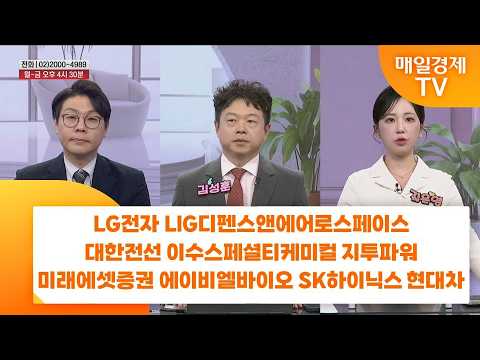
Amid Chairman Chey Tae-won's comments on US fabs and warnings about chipflation, semiconductors, robotics, and food stocks are drawing attention as new investment opportunities.
He said next year would be like a war, expressing concern over supply chain instability. Such remarks are expected to add to the uncertainty in the global semiconductor market.
Team Leader Min Pum-reum issued a strong warning about 'chipflation' next year. As chips are expensive yet essential to purchase, the consumer prices of products made with costly chips could rise, potentially leading to broader consumption contraction. The analysis suggests this could also weigh on corporate profitability and become a burden on the economy as a whole.
Both companies also recorded factory utilization rates of 100%, indicating a focus on expanding semiconductor production capacity. This is interpreted as a preemptive investment to meet rising global chip demand.
Data center expansion driven by the AI boom is cited as the main factor, and semiconductor front-end and back-end equipment companies are expected to benefit first. The analysis suggests that factory expansion will directly drive demand for related equipment.
Team Leader Min Pum-reum stressed that although results vary by stock, it is important for individual investors not to be shaken during periods of ownership transition and miss the chance to hold. He advised taking a long-term view rather than reacting to short-term issues.
Team Leader Min Pum-reum stressed that a holding strategy is critical at this point for investors who bought stocks near the bottom. If companies' fundamentals are sound, selling after being shaken by short-term issues or macroeconomic factors could hand the opportunity to foreign or institutional investors, he explained. He added that a steady holding strategy without losing focus is therefore necessary.
The analysis holds that as robot technology advances and industrial adoption accelerates, it has become a major market trend. Investor interest in robotics companies is expected to rise further.
He noted that the stocks that rebounded first at the time were physical AI-related, reiterating the strength of the robotics sector. This means future leading stocks can be anticipated through the group that reacts most sensitively to market changes.
This reflects each company competing for leadership in the robotics market while together driving the growth of the entire sector. The competition and cooperation among these three will be a key factor determining the direction of the robotics market.
Several key physical AI events are scheduled, heightening expectations for the robot sector. Unitree's listing is imminent, and a large robot event will be held in China this week. Many view Unitree's listing as more likely to benefit domestic companies than to shock them as it once might have, and Team Leader Min Pureum forecast that the robot sector is still most likely to rebound strongly. These events are expected to further stimulate market interest and investor sentiment around physical AI technology development.
Team Leader Min Pureum explained that this meeting is bound to raise expectations for the humanoid robot that will be unveiled in the first quarter of next year in collaboration with Nvidia. Attention is focused on what synergies LG Electronics will create with Nvidia in its robot business.
For example, LG Electronics handles actuators, LG Innotek handles vision sensing, and LG Energy Solution handles batteries, giving it a three-pronged advantage. He explained that it is important to understand each company's role within the value chain and to quickly identify where opportunities arise depending on market conditions.
Samsung Electronics has launched a 'Physical AI Lab,' a dedicated physical AI organization, to strengthen its technological capabilities. Notably, it has recruited researchers who previously worked at Hyundai Motor. This can be interpreted as Samsung's move to absorb Hyundai's advanced technology or to secure technology on par with it. Samsung's investment is expected to further raise its competitiveness in robotics and physical AI.
CEO Lee Chang-dae described food stocks as 'sweet earnings,' explaining that the food sector, which had stagnated as it focused only on the domestic market, is being completely transformed as it turns its eyes overseas. Food stocks, once seen as stable defensive plays lacking innovation, are now showing a completely different face as overseas exports surge on the back of the K-food craze and the Korean Wave. The analysis suggests food stocks now have the potential to be growth stocks rather than just defensive plays.
Though previously strong in defensive characteristics, they have recently gained growth-stock traits as overseas exports have surged on the K-food craze. Food stocks are thus gaining investment appeal by combining stability with growth potential.
Robotis manufactures actuators, a core component accounting for 30 to 50 percent of humanoid robot costs, and is showing rapid growth with first-half shipments nearing last year's full-year total. However, Team Leader Min Pureum advised investors to approach the stock with a staggered buying strategy, given the possibility of a correction after its recent surge. Robotis's distinctive actuator technology is expected to become an important pillar of robot market growth. Investors need a careful trading strategy that weighs both the company's growth potential and market volatility.
In particular, as the share of exports to high-price regions such as the United States continues to rise, further growth is expected. CEO Lee Chang-dae assessed that Buldak noodles have achieved major success in global markets and are driving Samyang Foods' earnings, a representative example of K-food's strength. Through rising global demand and expanding high-value markets, Samyang Foods is expected to maintain solid growth going forward.
Answers come from the transcript, with the exact spot cited.
Want the next article from 매일경제TV?
When 매일경제TV publishes, we'll write it up like the one you just read and email it to you.
매일경제TV published 264 in the last 7 days.
 LG Electronics 250,000-won Target, LIG Nex1 Sell at 600,000 won, Hyundai Motor Hold for 500,000 won: Stock-by-Stock Investment Analysis매일경제TVlast month · 38:05 · 9.3K views · Created last month
 Foreigners Sell Six Days Straight, Yet Only Shipbuilders Are Bought매일경제TVlast month · 15:18 · 5.9K views · Created last month
 KOSPI Falls Below 6,000 as End of Buybacks Triggers Supply Shock매일경제TVlast month · 26:09 · 6.1K views · Created last month
