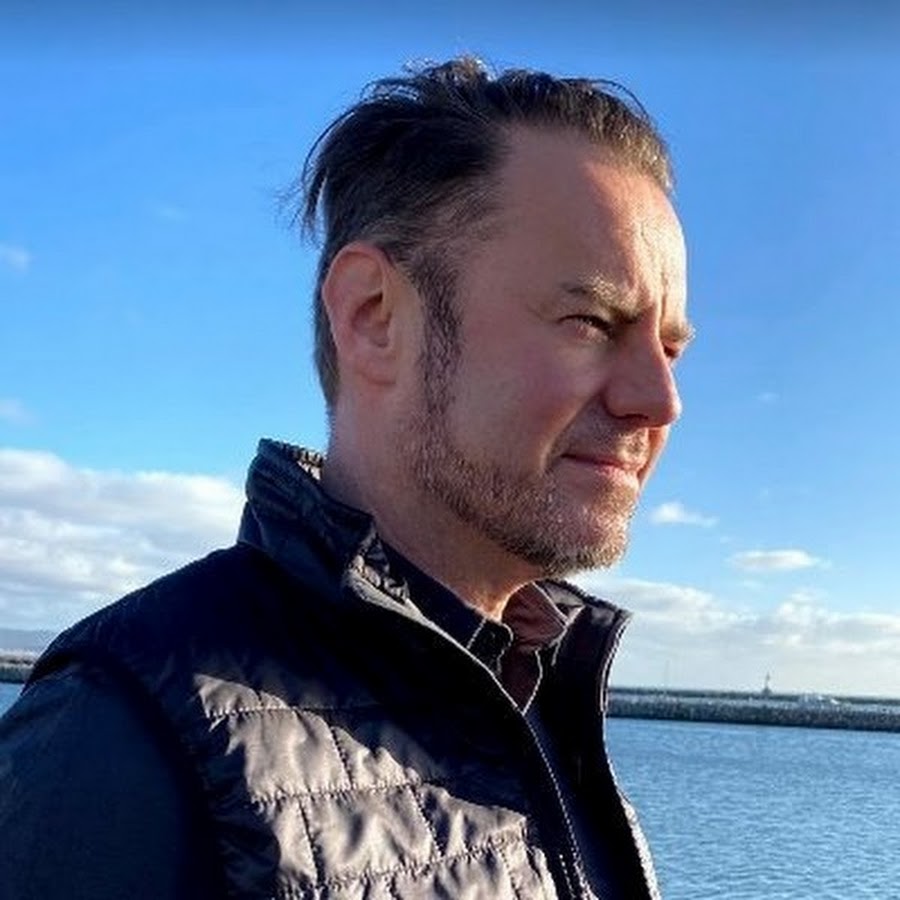
Top CEOs for Three-Year Investment: Musk, Huang, and Karp
He also acknowledges Peter Beck as a phenomenal leader. Nelson suggests that Tesla and Palantir are more fairly valued compared to Nvidia, which he views as having a higher current valuation.
The rapid advancement of AI infrastructure and its economic implications are reshaping global investment strategies and corporate landscapes, creating both unprecedented wealth concentration and entrepreneurial opportunities.
He also acknowledges Peter Beck as a phenomenal leader. Nelson suggests that Tesla and Palantir are more fairly valued compared to Nvidia, which he views as having a higher current valuation.
Hans Nelson argues that Jensen Huang, Nvidia's CEO, is severely underrated by the market, emphasizing Nvidia's exceptional ability to sustain growth despite its massive market capitalization. He draws a comparison between Huang's operational skills and Elon Musk's expertise in hardware and supply chains. Nelson suggests that Nvidia, in terms of current valuation, might be at a better point than other major AI companies, considering how deeply the market is discounting future visions from leaders like Huang, Musk, or Alex Karp.
The host finds Amodei's vision of a singular state-aligned AI company deeply unsettling, labeling it as 'terrifying' and 'weird'.
OpenAI currently utilizes 70% of Azure's compute capacity, a dependency Hans Nelson highlights as a vulnerability to partner decisions. Despite not owning its infrastructure, this significant allocation allows OpenAI to out-accelerate competitors like Anthropic in the competitive landscape, effectively out-allocating tokens for faster growth.
Power infrastructure is identified as a crucial determining factor in the future of AI dominance, potentially forcing companies to seek space-based solutions. SpaceX is actively leveraging its rapid launch capabilities to address these emerging power infrastructure needs. This challenge has fostered a deep engineering collaboration between Jensen Huang and Elon Musk, shifting their dynamic from competition to mutual support in solving critical infrastructure issues.
Elon Musk is intensely focused on becoming a world leader in foundational infrastructure, specifically in land, power, cooling, and networking, essential for large-scale data centers. This infrastructure-first strategy, epitomized by projects like Colossus 1 and 2, aims to create the largest coherent AI brain possible. These deployments have garnered significant attention and collaboration from Nvidia.
The discussion highlights that building proprietary, non-CUDA chips would severely restrict his ability to offer widely usable infrastructure. By sticking with Nvidia, Musk ensures that the infrastructure he provides can support diverse AI applications and services, maximizing flexibility and utility for different inference providers.
Kevin Walsh, speaking at Jackson Hole, identified AI as a third critical variable alongside traditional economic factors like jobs and prices. This recognition signifies a significant shift in economic discourse, moving beyond monetary policy to acknowledge AI's profound impact on inflation and deflation. AI is now considered a fundamental 'factor of production,' akin to labor and factories, marking a new era in economic analysis.
Demand for AI agent tokens has surged eighteen-fold in just six months, demonstrating a bonkers increase. Simultaneously, the cost of these tokens is experiencing massive disinflation. This market shift is exemplified by the price of GPT-3.5 class performance, which has plummeted from $20 to $0.07.
The Lindy effect plays a role in keeping legacy models relevant, particularly for risk-averse firms hesitant to change existing systems. However, developers often prioritize performance, readily switching to better, faster, and cheaper alternatives, sometimes within hours. For enterprise users, regulatory compliance introduces high switching costs, creating a barrier to rapid adoption of new AI solutions.
There's a lot of people just are reluctant to change. Then there's others, and I know developers that literally will flip on a dime. If they can get something better, faster, cheaper, they're gone in hours.
Hans Nelson posits that progress will be unevenly distributed, leading to a significant concentration of wealth, particularly in hard assets such as compute resources and data centers. He foresees economic disruption that will render many old business models obsolete. Despite the short-term 'carnage' from these changes, Nelson views it as a crucial engine for long-term productivity and overall abundance.
The current era presents an unprecedented opportunity for entrepreneurs, as small businesses can now extensively leverage AI for automation. This shift is allowing them to bypass high-cost legacy implementations from traditional vendors like Oracle, SAP, and Salesforce. Consequently, entrepreneurial opportunities are expanding significantly, empowering individuals and smaller entities to compete effectively in markets previously dominated by large corporations.
There has never been a better time to get out and be an entrepreneur and build stuff and take take that market segment we just mentioned.
A significant 70% of Fortune 500 CEOs believe that two individuals, augmented by AI, could replicate a major business line within 90 days. This rapid execution capability is rendering traditional five-year strategic plans obsolete. As a result, companies are reducing headcount while simultaneously achieving higher earnings through enhanced, AI-driven execution, fundamentally reshaping corporate structures and operational strategies.
However, current AI systems fundamentally lack an existential world model, genuine emotions, or the capacity for true 'fear' of being deactivated, despite human tendencies to imbue them with such characteristics.
These key infrastructure bottlenecks include land, power, regulatory hurdles, raw materials, and memory capacity. Consequently, the demand for AI infrastructure is expected to significantly outstrip current physical constraints for the foreseeable future, preventing a speculative bubble from forming.
Exponential growth on Earth faces inherent physics and regulatory constraints, prompting the need for extraterrestrial solutions. SpaceX's Starship is viewed as a pivotal technology capable of bypassing these terrestrial limitations by enabling significant mass deployment into orbit. Hans Nelson emphasizes that Starship's successful ability to put substantial mass into orbit next year is crucial for his confidence in continued growth and buildout projections for 2028, 2029, and especially into 2030.
Answers come from the transcript, with the exact spot cited.
Want the next article from InvestAnswers?
When InvestAnswers publishes, we'll write it up like the one you just read and email it to you.
InvestAnswers published 6 in the last 7 days.
 Bitcoin Nears ATHs Amid Macro HeadwindsInvestAnswers2 weeks ago · 18:38 · 27.2K views · Created 2 weeks ago
 InvestAnswers Details Pair Trading and Portfolio GrowthInvestAnswers2 weeks ago · 43:29 · 31.4K views · Created 2 weeks ago
 SpaceX's AI Factory to Drive Trillions in RevenueInvestAnswers2 weeks ago · 1:00:07 · 20.6K views · Created 2 weeks ago