Pungcheon River's brackish zone, where seawater meets fresh water
As the name Pungcheon, meaning sea wind bringing seawater inland, suggests, this place plays an important role in the glass eel's habitat.
How the Pacific-born glass eel grows in Gochang's Pungcheon into a 'freshwater eel,' and why it is valued.
As the name Pungcheon, meaning sea wind bringing seawater inland, suggests, this place plays an important role in the glass eel's habitat.
Thin as threads at 5 to 6 cm long, glass eels are born in the deep sea near the Philippines and make a life journey, riding the Kuroshio Current 3,000 km to Korea's coast.
They are catadromous fish that move between sea and fresh water, and as adults they return to their spawning grounds.
Because eels cannot be farmed, the some 70 eel farms in Gochang rely on glass eels caught in the wild; the sensitive fish are raised for a little over a year until they reach about 300 g and are shipped.
Glass eels are highly sensitive to change, but when carefully raised for roughly a year, they grow into adults of about 300 g and are shipped out.
Freshwater eels are extremely sensitive to changes in water, and because they cannot be hatched artificially, the method is to collect wild glass eels, raise them, and ship them as adults.
Glass eels are extremely sensitive to changes in water, so farms must manage them carefully for stable growth.
Glass eels begin to take on pigment as they feed, and after about 60 days they start growing rapidly.
Gochang's eel farms mix in seawater to recreate an environment similar to the Pungcheon, and after a little over a year, when the eels reach about 300 g, they can finally be sold on the market.
A tonic dish made by adding hand-torn dough to broth brewed from eel bones and innards shows the wisdom of using every part of the eel.
The value of Pungcheon eel has long been recognized historically, mentioned even in the pansori text Tobyeolga as a tonic food for curing the Dragon King's illness.
Eels are no longer as easy to see as they once were, which suggests changes in the river environment.
He stretches netting over frames and sews it by hand, and since he has made his glass eel fishing tools himself every year, he has become skilled at using a sewing machine too.
Answers come from the transcript, with the exact spot cited.
Want the next article from EBSDocumentary (EBS 다큐)?
When EBSDocumentary (EBS 다큐) publishes, we'll write it up like the one you just read and email it to you.
EBSDocumentary (EBS 다큐) published 196 in the last 7 days.
 80 Meals, One Day on a Two-Day Film LocationEBSDocumentary (EBS 다큐)2 days ago · 19:37 · 676K views · Created 2 days ago
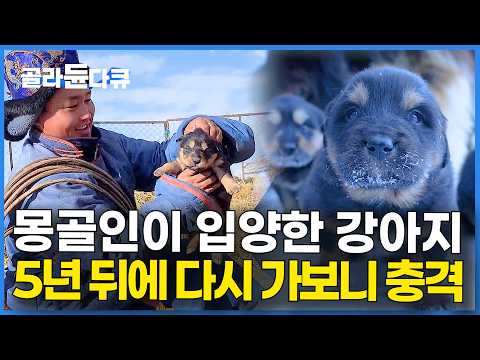 Mongolian Herding Dog Bankar Faces Down a Wolf: By Day It Chases Predators, By Night It Guards the Family's SleepEBSDocumentary (EBS 다큐)5 days ago · 24:33 · 257.4K views · Created 5 days ago
 Food critic who moved from Seoul to Inje and settled there visits a set meal of highland crops and wild mushroomsEBSDocumentary (EBS 다큐)last week · 13:35 · 1.1K views · Created last week