Lost Supreme Council race; absence from the 'set play' cited as cause
He said that in the final stretch, certain candidates formed an organized alliance, and that he had predicted his own defeat because he was not part of it.
Party dynamics and political issues are examined alongside the subtle meanings of language shaped by cultural differences, presenting multiple perspectives.
He said that in the final stretch, certain candidates formed an organized alliance, and that he had predicted his own defeat because he was not part of it.
An analysis holds that the party's mood changed completely after the dinner between the president and leadership. Senior spokesperson Park Seong-jun explained that the dinner confirmed a sense of being a 'community of shared fate' between the president and leadership, and that the existing internal conflict structure shifted to a resolute atmosphere where things were 'totally different before and after.'
This is interpreted as stemming from ongoing questions inside and outside the party about In's fitness for the post, including his opposition to Yoon Seok-yeol's impeachment. Rep. Park Joo-min relayed internal party sentiment, saying, "Party leader Kim Min-seok made a recommendation to the president. There's talk of 'inside and outside the party,' and that really is the mood within the party too."
Concern was raised that a former prosecutor might be appointed as the first head of the Serious Crimes Investigation Agency (CIA). Rep. Hwang Un-ha warned that if a former prosecutor becomes CIA head, the flawed investigative practices of the existing prosecution could be carried over. He said, "The CIA head in particular should cut ties with those past flawed investigative practices... If there are former prosecutors who can do that, there's no reason to exclude them, but in my experience, I haven't seen a single one like that," strongly criticizing and expressing a negative stance on appointing former prosecutors.
Reportedly around 100 people have applied for the CIA, but the Ministry of the Interior and Safety has said it is difficult to disclose a specific list. Rep. Hwang Un-ha said, "As Rep. Park Joo-min mentioned, about 100 people... the Ministry will probably find it hard to disclose now. Rumors say there are some senior figures too, even prosecutors at the chief prosecutor level and above," suggesting that capable senior prosecutors may be among the applicants, which has heightened curiosity about who they are.
Rep. Hwang Un-ha said, "It's a one-time preferential treatment, so some degree of it is unavoidable to launch with the necessary personnel stably at the start," emphasizing that such measures are needed at least to prevent a repeat of the boycott by prosecutors dispatched to past special counsels.
Rep. Hwang Un-ha said, "You say we should exclude former prosecutors, but who specifically should it be? Personnel matters tend to go badly when they're made public, so they have to be kept carefully under wraps," pointing to the need for caution in the selection process.
Rep. Park Seong-jun said, "It's not yet on the leadership's discussion table and has been pushed down the priorities. I of course think the special counsel on fabricated indictments should move forward quickly," acknowledging the need for early action while taking a cautious stance.
Reporter Hong Sa-hoon said, "No matter how I think about it, it's a bit fishy. Even though no appellate hearing date has been set, he was just let out. And Myung Tae-gyun's judge is Oh Se-hoon's judge," expressing doubt about the bail decision because the same court is handling Mayor Oh Se-hoon's case.
With a re-election in April next year seen as unlikely, Reporter Hong Sa-hoon said, "Even if things turn out like gears, the grounds for voiding the election must be confirmed by February 28. Oh's lawyers are considering a constitutional complaint depending on the trial result. It's to drag things out." He explained that Oh's legal team is being reinforced, making a Supreme Court appeal and trial delays likely, suggesting Oh's trial could be prolonged.
On why Daejeon's lake was called 'Ho-ju' (a play on 'Hoju', Australia), Jung Yeon-seo explained, "It's Daejeon's Australia, where you can't swim." She added that this is because the lake is designated a water source protection area, so swimming and other water activities are strictly regulated.
Jung said, "The old face went from a triangle to a bit more modern, with some plastic surgery, and it's changed a lot," explaining that Kkum-dol-i has been renewed into a more modern look.
She added that the dish is so popular that a long wait is essential because ingredients run out.
Debate arose over the identity of 'tofu dulubagi' (a stir-fry). Jung Yeon-seo explained, "Tofu dulubagi isn't meat with tofu added; it's a dulubagi made with only tofu," noting that it is meatless and made solely of tofu. She also mentioned a theory that the dish originated during the wartime refugee period, sparking curiosity about its background.
On managing IP usage fees for Daejeon's characters, Jung Yeon-seo said, "For public-interest uses like promotion, I let people use it for free, and for commercial sales, I charge a separate, low IP usage fee to manage quality," indicating that public-interest use is supported free of charge while low IP fees for commercial use are meant to manage the character's quality and image.
A discussion covered the difference in marketing strategies between Gwangju's 'Omena' and Daejeon's 'Kkum-dol-i'. Kim Eo-jun asked, "Kkum-dol-i has been pushed across the board for nearly 40 years, right? But how far has Omena been pushed?", focusing on the difference in promotion approaches. Kkum-dol-i has pursued active marketing, even launching instant noodles over 40 years. In particular, the Kkum-dol-i ramen sold 1.1 million packs in one year and six months through collaboration between the tourism corporation and a Daejeon company. Omena, by contrast, was described as pursuing merchandise-centered marketing, operating an 'Omena House' in Jeonil Building.
A panelist said, "There's Chinese characters for it, but people don't really express it that way. 'Shiwon-seop-seop-hada' resolves something but leaves a lingering regret. 'Miun-jeong, go-un-jeong' is so hard to explain," describing a uniquely Korean sentiment. Korean 'han' is a complex emotion engraved deep in the bones, but is hard to express as a single word in languages like Chinese. The discussion also noted that ambivalent emotions where resolution and regret coexist, as in 'shiwon-seop-seop-hada', or complex relational feelings mixing love and hate, as in 'miun-jeong, go-un-jeong', are very hard to explain in one word in other cultures.
She added that in romantic relationships, 'jeong' can also express a complex state mixing dislike and love.
Cultural differences in using the word 'cute' toward adult women were discussed. Lee Su said, "When you ask adults about their girlfriend, they don't use 'cute'. In Mongolia, being cute isn't something women aspire to," noting that in Mongolia the word 'cute' is not used for adult women. Mongolian women consider being cool, girl-crush-worthy, or pretty the highest compliments. In Japan, by contrast, 'kawaii (cute)' is used as the highest compliment encompassing all positive meanings, underscoring how much expressions differ in meaning across cultures.
It was pointed out that in Korean, the expression 'chakhada' (good/kind) can be used in a negative sense rather than as praise. A panelist explained, "In Korea it's used somewhat negatively. In Korea, 'doesn't harm others' isn't so bad, but it also means slightly lacking, somewhat insufficient," meaning a state of not harming others that can sometimes imply a lack of individuality or being somewhat deficient. The analysis holds that it can be used as an euphemism when there's nothing particularly praiseworthy about the other person.
Words with distinctly Korean sentiment, such as 'yunseul' (sunlit ripples on water), 'noeul' (sunset glow), and 'yamuda' (capable, neat), were cited as representative examples.
It was also stressed that saying 'you look like a woman to me' could be interpreted as displeasing, implying the other person hadn't seen you as a romantic partner before, so caution is needed.
The next episode will discuss words from other cultures, such as Polish and Mongolian, that are hard to translate into Korean. The host previewed, "Next time, we'll go the other way, Polish words into Korean, Mongolian words into Korean, because when cultures differ, there's often no exact equivalent. Looking at those words, you can also feel the cultural differences," announcing a session to deepen understanding of cultural differences through these words.
Answers come from the transcript, with the exact spot cited.
Want the next article from 김어준의 겸손은힘들다 뉴스공장?
When 김어준의 겸손은힘들다 뉴스공장 publishes, we'll write it up like the one you just read and email it to you.
김어준의 겸손은힘들다 뉴스공장 published 29 in the last 7 days.
 Rates, AI, Construction: Three Turning Points for the Market김어준의 겸손은힘들다 뉴스공장last month · 1:22:52 · 231.6K views · Created last month
 A New Normal: Korea's Bright and Dark Sides김어준의 겸손은힘들다 뉴스공장last month · 2:29:07 · 192.4K views · Created last month
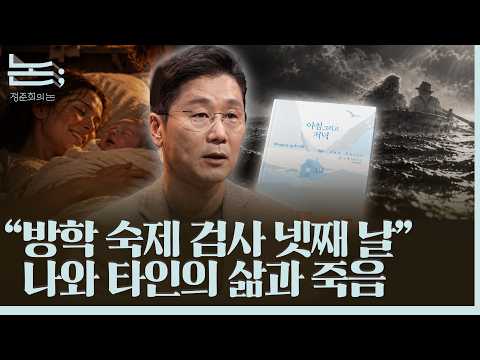 A Commentary on Jon Fosse's 'Morning and Evening'김어준의 겸손은힘들다 뉴스공장last month · 35:44 · 63.4K views · Created last month
