NVIDIA's Stagnant Operating Profit Margin Shifts Semiconductor Market Expectations
This is attributed to the weakening of its monopolistic position and a trend of AI momentum shifting towards memory semiconductors.
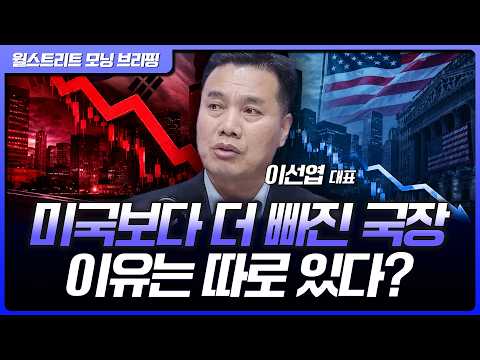
Amidst increased volatility in semiconductor stocks due to NVIDIA's stagnating operating profit margin and Samsung Electronics' disappointing shareholder returns, this article analyzes the nature of foreign selling and the reasons for co-fluctuations in the KOSDAQ market, proposing corresponding investment strategies.
This is attributed to the weakening of its monopolistic position and a trend of AI momentum shifting towards memory semiconductors.
Both companies announced strategies to return about 50% of cash flow to shareholders, but Samsung Electronics' conservative stance is pointed out as negatively impacting its stock price. Specifically, there's an opinion that Samsung Electronics failed to meet investor expectations by not expressing a clear intention for share buybacks.
Samsung Electronics' conservative announcement style has been criticized for negatively impacting its stock price. The absence of a clear statement on shareholder value return is seen as a regret, analyzed as stemming from limitations in its organizational culture and ownership structure. Indeed, some argue that if Samsung Electronics had expressed a clear intention for share buybacks, market evaluation would have been significantly different.
They couldn't say that one thing, and it led to this situation. If they had just said that one thing, whether it actually happened or not, I believe the evaluation could have been very different.
Recent large-scale selling by foreign investors is analyzed as the result of mechanical passive funds reacting to fundamental changes. Some funds are mechanically selling promised volumes, considering fundamental changes related to shareholder value return. This selling pressure is expected to conclude this week, followed by anticipation of long-term capital inflow.
Negative factors surrounding the semiconductor market, such as peak valuation theories, China risk concerns, and shareholder return controversies, are expected to resolve starting this week. SK Hynix's and Samsung Electronics' announcements on enhancing shareholder value are anticipated to conclude the negative momentum for the semiconductor sector. Consequently, there is a possibility that semiconductor stock prices will peak again and trend upward from the end of the December quarter.
Long-term foreign capital does not deliberate on stock selection like individual investors; rather, it typically executes mechanically consigned orders to buy a certain volume daily, based on quantitative or temporal concepts. This implies it's merely a matter of timing, not an agent of price adjustment or volume control. Therefore, such mechanical supply and demand movements may cause temporary volatility but do not significantly impact long-term trends.
This phenomenon occurs when long positions in semiconductors are liquidated, while short positions in KOSDAQ are simultaneously covered. This is a temporary rebound, not a major bull run for the KOSDAQ market, and such long liquidation-short cover patterns are a crucial factor explaining short-term market volatility.
Foreign investors employ a strategy of simultaneously operating long (buy) and short (sell) positions in their portfolios. Last year, power equipment was the top long position and secondary batteries were the top short position. This year, there was a shift with semiconductors becoming the top long position. Such foreign investors have a structure that requires liquidating both positions simultaneously depending on market conditions. This is a major cause of divergent market movements.
Large funds require separate approval procedures and clear justifications to incorporate KOSDAQ stocks. Additionally, it is pointed out that KOSDAQ ETFs may limit the rise of top-tier stocks due to their composition, reducing their investment appeal.
However, if both semiconductors and KOSDAQ fall together, it should be viewed as a signal of a major market downturn, requiring cautious action. While movements caused by long-short liquidation patterns don't require excessive anxiety, accurately understanding market direction is crucial.
The capitalist economic system cannot sustain itself without growth, so the fundamental direction of the market is always upward. Therefore, it is standard market practice to bet on the upward trend in line with long-term trends, rather than short-term counter-directional investments. Volatility or short-term counter-directional movements should be approached briefly from a trading perspective, and a strategy of investing in the market's growth potential is effective in the broader scheme.
International oil prices have fallen sharply to around $82.11, and the US 10-year Treasury yield has also stabilized, dropping from above 4.7% to 4.672%. This is attributed to easing concerns about the Iran war, coupled with the effect of the US Treasury Department using its TGA (Treasury General Account) to manage short-term interest rates. These changes in the macro environment could act as positive signals for the market.
This policy is anticipated to play a crucial role in actively managing interest rates until before March of next year. Interest rate management through the TGA account can contribute to reducing short-term market volatility and fostering a stable investment environment.
Conversely, the consumer discretionary sector, linked to falling oil prices and stabilizing bond yields, is classified as a long-term holding sector, and investing in line with the market's long-term trend is advisable.
Answers come from the transcript, with the exact spot cited.
Want the next article from 삼프로TV 3PROTV?
When 삼프로TV 3PROTV publishes, we'll write it up like the one you just read and email it to you.
삼프로TV 3PROTV published 105 in the last 7 days.
 SK hynix Halts Review of Solidigm IPO Amid Shareholder Backlash and Market Conditions삼프로TV 3PROTV3 weeks ago · 34:29 · 8.2K views · Created 3 weeks ago
 Korean Stocks Fall Deeper Than U.S. Peers, Excessive Divergence and Investor Sentiment Sink삼프로TV 3PROTV3 weeks ago · 29:29 · 2.7K views · Created 3 weeks ago
 Park Byung-chang Diagnoses Market as 'In a Slump'… Stresses Slimming Holdings to Protect Assets삼프로TV 3PROTV3 weeks ago · 41:39 · 4 views · Created 3 weeks ago
