The repeated decline at 2 p.m. in the stock market
This is because there is no clear direction in the market, so short-term trading dominates; while share buybacks support the index, buying pressure tends to fade in the afternoon.
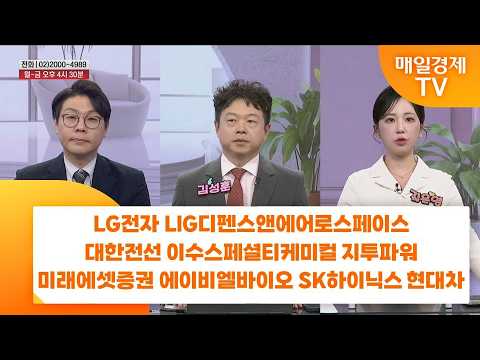
IBK Investment & Securities' Department Head Ham Jeong-nam diagnoses the afternoon sell-off pattern in the current market and the supply-demand imbalance in the bond market, and analyzes how the AI pace-control theory will affect the semiconductor and robotics sectors.
This is because there is no clear direction in the market, so short-term trading dominates; while share buybacks support the index, buying pressure tends to fade in the afternoon.
Concerns that inflation could trigger rate increases are raising market vigilance.
There are concerns that if the central bank does not raise the policy rate this time, policy momentum will weaken ahead of the November midterm elections.
The market mood is that it wants a rate hike to resolve uncertainty and provide a clear policy direction.
There are concerns that artificial intelligence (AI) technology is advancing so fast that it deprives existing products of sufficient opportunity to recoup returns.
Because companies that develop new models face inefficiency when those models are replaced within a short period, a pace-control theory that slows the adoption of technology could act as a positive signal for the market.
During the share buyback period, such strategic adjustment could weigh on Samsung Electronics and SK hynix stock prices in the short term.
However, from the perspective of semiconductor capital raising, a longer cycle works as a long-term positive, so while sharp surges may be difficult, downside rigidity is expected to be secured.
Rainbow Robotics and others in the Hyundai Motor Group value chain, along with Robotis and SPG, which are evaluated as key stocks in the robotics sector, will need strategies that respond to the KOSDAQ index flow.
Robotics is the sector that moves fastest within the theme and sees rotational buying, so it could become a core beneficiary of the AI pace-control theory.
The pharma and bio sector strongly shows the characteristics of stock-specific markets, where share prices can suddenly rise or fall even without any special scenario or environmental change.
Current investor sentiment is at a bottom-level state, pushed to the edge of a cliff, so a process is needed to check whether the spread of stock-specific moves will continue.
Stocks with positive catalysts such as research reports or order-win disclosures and aligned technical timing show strong share price momentum, displaying overwhelmingly stronger upward force than the bio sector.
This strategic picture responds to market expectations that 2027 will be the peak of the semiconductor shortage, aiming to prevent a chicken game caused by excessive capacity expansion and to encourage rational investment. The U.S.-China summit is analyzed as a key factor for AI pace control and semiconductor agreements.
Optical communications is a sector worth watching as a bottleneck for raising the technical efficiency of data centers.
Related stocks include Woori-Lo, Woorinet, PSK Holdings, RF Materials, and Korea Advanced Materials. In the second half, the SA (Standalone) 5G commercialization issue and the frequency auction event are also expected to have a positive effect on telecom equipment stocks.
Isn't optical communications the other bottleneck that really turns improving technical utility into top-quality results? The energy and power segments are already grouped into very large sectors, so I don't think they suit short-term trading very well.
Due to September volatility, sellers holding cash are appearing; if the Korean market alone falls unusually sharply right before the Chuseok holiday, buyers may flow in near the end of the session.
Therefore, when the index falls, it can be used as a buying opportunity from a trading perspective.
If rates remain on hold, fatigue over policy uncertainty that recurs every month is growing, and the bond market is eager for a clear direction after a hike.
Answers come from the transcript, with the exact spot cited.
Want the next article from 매일경제TV?
When 매일경제TV publishes, we'll write it up like the one you just read and email it to you.
매일경제TV published 265 in the last 7 days.
 LG Electronics 250,000-won Target, LIG Nex1 Sell at 600,000 won, Hyundai Motor Hold for 500,000 won: Stock-by-Stock Investment Analysis매일경제TVlast month · 38:05 · 9.3K views · Created last month
 Foreigners Sell Six Days Straight, Yet Only Shipbuilders Are Bought매일경제TVlast month · 15:18 · 5.9K views · Created last month
 KOSPI Falls Below 6,000 as End of Buybacks Triggers Supply Shock매일경제TVlast month · 26:09 · 6.1K views · Created last month
