SK hynix labor and management move toward tentative wage deal after overnight talks
After protracted negotiations, they reportedly moved toward a tentative agreement. The outcome of these talks will be finalized after a member vote.
As the AI chip boom continues, debate persists over SK hynix's bonus payout method, reports of a U.S. subsidiary Solidigm pursuing a Nasdaq listing, and its shareholder return policy.
After protracted negotiations, they reportedly moved toward a tentative agreement. The outcome of these talks will be finalized after a member vote.
The central issue in these talks was a plan to pay a substantial portion of Excess Profit Sharing (PS) in company shares rather than cash. Management reportedly proposed paying 60 to 70% of PS in stock, with sale restrictions of two to four years. The union strongly opposed this and demanded cash payment, but the two sides appear to have found common ground in the end.
The Korea Shareholders' Movement Headquarters held a press conference today in front of the Gyeonggi Southern Provincial Police Agency, arguing that the agreements linking Samsung Electronics and SK hynix bonuses to operating profit are void from the outset. They stressed that profit-linked bonuses are not wages but a disposal of business results after the fact, so they must be approved by a shareholders' meeting rather than by a labor-management agreement. They called for the full clawback of bonuses already paid if the agreements are ruled void.
Solidigm is a U.S. subsidiary that SK hynix established after acquiring Intel's NAND and solid-state drive (SSD) business. Its corporate value is currently estimated at around 50 trillion won, and there is speculation it could raise up to 10 trillion won in a pre-IPO round before listing on Nasdaq. Following this news, concern over corporate value erosion is spreading among SK hynix shareholders.
Critics point out that if Solidigm lists separately, the value of SK hynix's NAND business could be dispersed. While Solidigm's results could still be consolidated for accounting purposes, funds that would otherwise be invested in NAND could flow into Solidigm shares rather than SK hynix. Analysts say this could ultimately reduce the investment appeal of parent company SK hynix.
One expert noted that if Solidigm is spun off, a substantial share of value would effectively leave SK hynix. He said investors who want only the NAND business would sell SK hynix and buy Solidigm instead. He emphasized that this would inevitably have a negative effect on corporate valuation.
SK hynix's record earnings have greatly boosted its cash generation, and it has secured substantial funds through an ADR issuance. For this reason, critics question whether it is necessary to list a core subsidiary separately to raise additional capital. They argue that pursuing a spin-off listing despite already having ample financial strength would undermine shareholder value.
As investment in AI data centers grows, the warmth in the semiconductor market is spreading from high-bandwidth memory (HBM) to the NAND market. In particular, demand is surging for SSDs, enterprise storage devices that use NAND flash to store and retrieve large volumes of data quickly. This is supporting a positive outlook for the NAND market.
This figure shows the steep growth of the NAND market. Revenue growth is expected to accelerate further in tandem with rising demand from AI and data centers.
Rather than investing the full amount itself, Nvidia is attracting global financial capital to support customers in building AI data centers. This is seen as a strategy to spread the financial burden of AI infrastructure investment and secure scalability.
This large-scale shareholder return policy exceeds market expectations and is expected to have a positive effect on share price support and restoring shareholder confidence. The decision is drawing attention alongside the Solidigm listing controversy.
That is more than ten times the existing annual return. Samsung Electronics is also expected to pursue active policies to enhance shareholder value, reflecting an expanding shareholder return trend across the chip industry.
Even if shareholder returns are significantly expanded, the negative effects of spinning off a core subsidiary may be difficult to avoid. This remains an important task SK hynix must address through communication with its shareholders.
This reflects the market view that simply expanding shareholder returns cannot justify a Solidigm listing. In other words, analysts warn that strong backlash will follow unless a clear link between shareholder returns and the Solidigm listing is demonstrated.
The expert said the market has excessive expectations for both SK hynix and Samsung Electronics. He advised that a more conservative outlook would be more appropriate than an overly optimistic one. This underscores the need to approach the real effects of chip stock shareholder return policies with caution.
Answers come from the transcript, with the exact spot cited.
Want the next article from 매일경제TV?
When 매일경제TV publishes, we'll write it up like the one you just read and email it to you.
매일경제TV published 290 in the last 7 days.
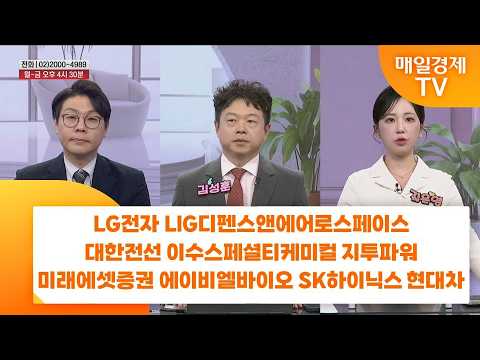 LG Electronics 250,000-won Target, LIG Nex1 Sell at 600,000 won, Hyundai Motor Hold for 500,000 won: Stock-by-Stock Investment Analysis매일경제TV3 weeks ago · 38:05 · 9.3K views · Created 3 weeks ago
 Foreigners Sell Six Days Straight, Yet Only Shipbuilders Are Bought매일경제TVlast month · 15:18 · 5.9K views · Created last month
 KOSPI Falls Below 6,000 as End of Buybacks Triggers Supply Shock매일경제TVlast month · 26:09 · 6.1K views · Created last month
