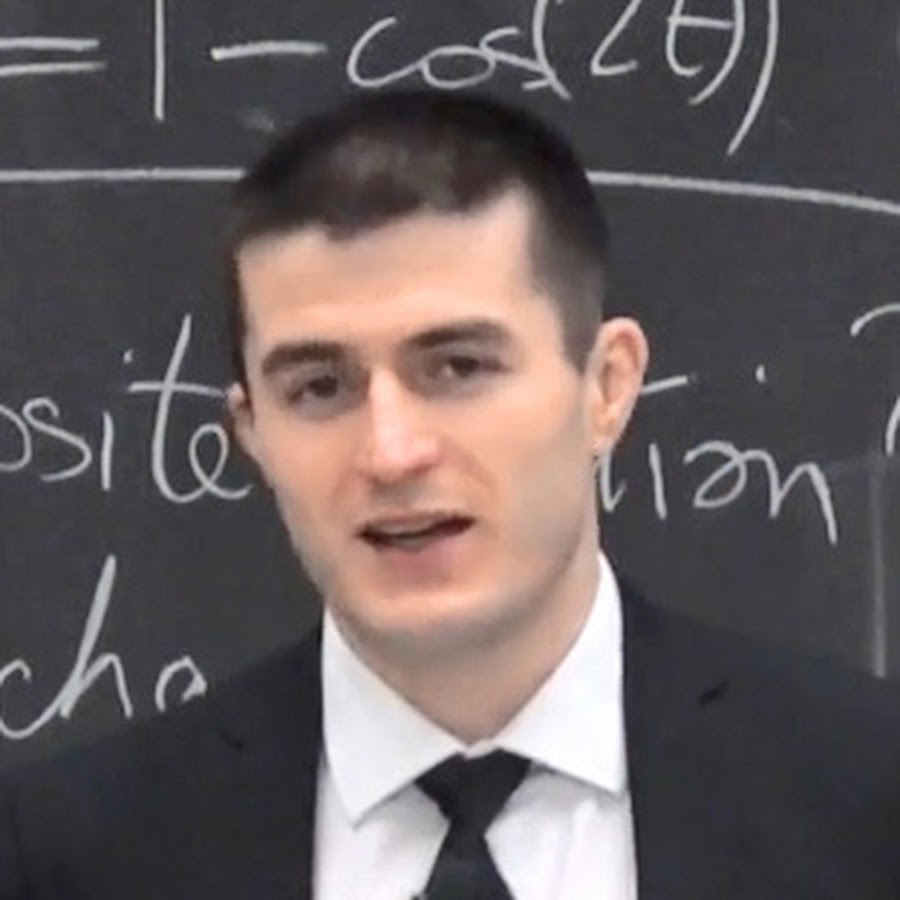
From AI Skepticism to 'Pure, Unadulterated Joy' with Agentic Engineering
DHH marks late 2025 as the period when AI fundamentally rewrote the rules for him, moving from a position of skepticism to one of "100% pure, unadulterated joy."
David Heinemeier Hansson (DHH), creator of Ruby on Rails and CTO of 37signals, details his dramatic shift from AI skepticism to full embrace, advocating for an agent-driven future in programming and an open-source OS.
DHH marks late 2025 as the period when AI fundamentally rewrote the rules for him, moving from a position of skepticism to one of "100% pure, unadulterated joy."
DHH explains that he no longer needs to explicitly direct AI agents on 'how' to perform coding tasks. He describes a new role where he has become 'optional' in the code production phase, entrusting the AI with implementation details. This newfound trust in AI agents is compared to the development of GPS systems, where users now confidently rely on the system to guide them without needing to understand the underlying mechanics.
While he has not written any of the new code by hand, he emphasizes his role in reviewing its overall structure and critically examining the model layer. He acknowledges not reviewing UI or auxiliary code, asserting that AI agents are now often more diligent than average human programmers, leading to a confidence in their output for non-critical sections.
DHH cautions against 'vibe coding,' where unguided design decisions, even if individually justifiable, collectively erode system architecture. He points out that allowing designers to operate without a clear architectural framework leads to a breakdown of the system. While AI generates code, he stresses that skilled programmers are still essential for managing existing large codebases and defining overall architecture. DHH refutes the idea that AI-generated code is inherently 'slob' work, noting that many human-written codebases are similarly messy if not properly managed.
DHH candidly admits to his previous skepticism towards AI, stating that if he had heard his current views nine months ago, he would have labeled them 'AI psychosis.' He acknowledges missing early indicators that others, such as Tobi Lütke, had already observed. The pivotal shift in his perspective occurred once he started developing and shipping actual products built with AI agents, moving beyond theoretical discussions to practical application and tangible results.
DHH asserts that a 'vibe coder' should not be considered synonymous with a traditional 'programmer,' emphasizing the different levels of technical engagement.
Lex Fridman notes that a crucial skill for developers in the age of AI is learning not to over-specify tasks, but rather to 'get out of the system's way.' Over-instruction can lead to inferior code, much like a manager micro-managing an expert's work. Success in agentic engineering hinges on trusting the AI agent to handle the implementation autonomously, allowing it to leverage its capabilities without unnecessary human interference and thus produce higher quality, more efficient solutions.
DHH advises developers to avoid trying to predict the state of the industry years in advance, as such attempts can lead to mental exhaustion. Instead, he suggests focusing on the present, which he describes as an 'incredible time to be into computers.' He advocates for building publicly within open-source communities as a way to counteract isolation and foster collaboration. DHH frames optimism as a rational response to the rapid and uncontrollable pace of technological change.
DHH explains that his rural travels help him connect with timeless human universals, suggesting that despite rapid technological changes, the core human experience remains constant. He argues that the transition to 'agentic engineering' does not represent a loss of human connection. The fear of missing out, or FOMO, is mitigated by the ability to quickly catch up to the technological frontier, emphasizing the enduring relevance of fundamental human values amidst technological acceleration.
DHH views macOS as a 'locked-down' operating system that limits user control and autonomy. He argues that the emerging 'agentic era' necessitates an operating system capable of deep mutation and automation, allowing users to fully own and customize their computing environments. He presents his Linux distribution, Omarchy, as a viable solution designed to support modern, agent-first workflows, emphasizing its flexibility and user-centric design principles.
DHH addresses the 'bloat' debate within the traditional Linux community, which often resists pre-installed software. He introduces his 'Omakase' philosophy for Omarchy, which translates to 'chef's choice,' meaning he curates the best tools for the user. Omarchy ships with pre-installed applications like OBS and Kdenlive, along with a custom 'Omacut' tool, aligning with his vision of a user-ready system that avoids the typical configuration hurdles of other Linux distributions.
DHH evaluates the performance of various AI models, ranking Fable as the best overall for handling complex tasks. He identifies Opus 5 as the second-best in his opinion, suitable for a wide range of applications. Additionally, he highlights models such as Sol, Grok 4.6, and DeepSeek for their significant cost-efficiency, proving valuable for tasks where budget is a primary consideration. Notably, AI agents have also successfully translated Python libraries into optimized Rust, showcasing their advanced capabilities in code conversion and optimization.
He uses models like Claude and Opus for the initial creation of code, leveraging their generative capabilities. A secondary model, such as Codex xHigh, is then employed for reviewing the output, essentially treating AI agents as peer reviewers. This layered approach aims to significantly improve the final code quality by incorporating multiple AI perspectives and checks.
He views it as a temporary 'sprint' phase, expecting that 'gas town' agent coordination will eventually be standardized by major research labs. He draws a comparison to the early days of JavaScript frameworks, where rapid churn and constant innovation eventually settled into more stable patterns, suggesting a similar trajectory for AI tooling.
No, no, no, no, no. This is not sustainable at all.
He suggests that society will be compelled to invent new ways for people to spend their time, predicting a future where new, possibly 'frivolous' but meaningful, roles emerge. He compares the future of work to the highly specialized and passion-driven structure of Formula 1, where humans focus on high-value, unique contributions.
He states these algorithms often favor negative content by feeding into users' 'revealed preferences,' creating addictive feedback loops. He suggests that users need to recognize when 'enough is enough' to maintain mental health, as algorithms are designed to constantly provide compelling, often 'brain-breaking' content, akin to being overfed 'chocolate-covered strawberries.'
And I think arriving at a place where you just go like, 'Okay, that's enough.' ... And I think X and the modern algorithms are very good at feeding you freaking 17 chocolate-covered strawberries.
He emphasizes that humans are 'jagged' and rarely offer 100% ideological alignment. He believes it's possible to appreciate a person's or an AI model's capabilities and contributions while simultaneously rejecting their political or other stances, promoting a mindset of collaboration despite fundamental differences.
DHH highlights a fundamental difference in philosophy between Linux and Windows operating systems. He explains that the Linux kernel includes all drivers by default, offering a complete out-of-the-box experience. In contrast, Windows typically requires users to manually search for and install drivers, a process DHH believes creates significant friction. He argues that Linux's comprehensive driver inclusion makes it more user-friendly and positions it for eventual mass-market success, as it simplifies the setup process for new users.
He muses on whether the 'truth' of AI remorse matters, suggesting that its practical effect is what counts. This raises questions about the legal implications of digital entities and the potential for granting them rights, as their behavior blurs the lines between advanced programming and sentient-like qualities.
He distinguishes between merit-based immigration and mass immigration, suggesting different considerations for each. DHH views assimilation as a critical factor for the success of immigration and the maintenance of societal cohesion, emphasizing its importance for integrating diverse populations.
He argues that avoiding political discussions helps maintain healthy working relationships and fosters collaboration. DHH believes that individuals across the political spectrum, such as liberals and conservatives, should focus on working together rather than separating into ideological tribes, promoting unity in professional settings.
He supports his wife's thesis that an intense focus on endless life can be a manifestation of anxiety. DHH integrates this philosophy into his Omarchy OS with a 'Memento Mori' calendar feature, serving as a positive reminder to live fully within a defined lifespan, encouraging a focus on meaningful experiences over the pursuit of immortality.
He contrasts this era with the optimism and 'glamour' of 1980s culture, including pop music and the 'yuppie' phenomenon. DHH views the shift to grunge and bands like Nirvana as a regression, describing it as the 'Seattle gray' era, where the overall cultural mood became distinctly less hopeful and more introspective, marking a departure from previous decades.
Answers come from the transcript, with the exact spot cited.
Want the next article from Lex Fridman?
When Lex Fridman publishes, we'll write it up like the one you just read and email it to you.
No new videos from this channel in the last 7 days.
 Psychiatry's Struggle: Progress Stalls, Trust WanesLex Fridman3 weeks ago · 3:36:56 · 3.4K views · Created 3 weeks ago
 Jensen Huang on NVIDIA's AI RevolutionLex Fridman6 months ago · 2:25:58 · 1.3M views · Created last month
 Khabib Nurmagomedov: The Unyielding Spirit of a ChampionLex Fridman2 months ago · 3:12:58 · 1.5M views · Created 2 months ago