Friends of 30 years trade bank jobs for campsite ownership
The campsite was founded by three friends: Woo Jun-gi, who quit his bank job, and Song Cheol-min and Lee Gang-myeong.
A group of three friends running a mountain campsite in Hongcheon, Gangwon-do, fights bitter cold to welcome their guests.
The campsite was founded by three friends: Woo Jun-gi, who quit his bank job, and Song Cheol-min and Lee Gang-myeong.
Clearing snow with a blower, switching every 200m to clear just enough width for a car, is an essential step for the safety of winter guests and operators. The managers warned that if snow is left to freeze, everyone could be cut off.
The three managers take turns every 200m, using blowers to clear only the width a car needs to pass.
If the work falls behind, the road quickly turns to ice and the risk of accidents rises, so quick and continuous work is required.
The campsite managers say that if the snow isn't cleared, the access road freezes solid and vehicles can't pass.
If cars can't get in, they can't take guests, and that hits business directly, so snow clearing is a matter of livelihood.
Only after six hard hours of work is the campsite finally ready to operate.
The chronic winter problem that wears the campsite managers down most is pipes freezing. Even after the pipes are thawed, they refreeze overnight, again and again.
Until the pipes thaw, they get water by breaking the stream ice themselves and carrying it back.
In this way, they are running a campsite through winter for the first time and facing hardships they didn't expect.
Because the mountain location makes it hard to call in repair specialists, when pipes freeze they thaw them themselves with steam used for insulation. The manager carries water by hand every day to supply the kitchen and restrooms.
When pipes freeze, they thaw the hoses directly, using insulation steam or boiling water.
Because it is often hard to call in repair specialists in the mountains, the managers do the repairs themselves to keep the facilities running.
One of the campsite managers majored in cooking and holds certifications in Korean and Western cuisine.
Using that expertise, they sell chicken dishes such as dakgalbi and dakbokkeumtang, which helps make up for the drop in campsite sales in winter.
The food has become so popular by word of mouth that some guests come only to eat without camping, which is a big help to the campsite's business.
Starting around 4 p.m., when the temperature drops sharply, the pipes begin to freeze right away.
To secure enough water for the restrooms and toilets through the night, they have to carry water dozens of times.
The campsite managers take turns inspecting and maintaining the facilities to minimize the inconvenience caused by frozen pipes.
This is a monthly-rent style camping service in which tents are set up for a set period, and guests pay one month's rental fee and enjoy camping freely.
The manager provides stove rental and kerosene refill services to help long-term guests heat their tents.
Run by three friends of 30 years who each put their experience to use, the business started as Jun-gi's side job and became his main one. He said he had worked as a bank clerk and in tax collection.
The three friends of 30 years manage the campsite together, using their individual experience to create synergy.
Kang Myeong-sil, in charge of food, is the son of a rice-mill owner but experienced a past business failure.
All three of the campsite's operators came together with the resolve that this campsite is their last chance.
They run the campsite with the mindset of having burned their bridges, with nowhere to return if it fails.
The operators visit guests directly to ask them to keep quiet and check for any inconveniences. From 11 p.m., they run a quiet-hours policy and patrol at night.
They visit guests directly to ask for quiet and check for inconveniences, working to establish proper camping etiquette.
A related official said that because the ground freezes hard, they buy soil themselves to deal with it.
Because the mountainside is frozen, they bring in soil from outside for repairs, working to keep the campsite safe even in the depths of winter.
They also offer traditional sleds, so both children and adults can enjoy something different.
The operators also run an event that gives guests who catch a fish a free pass to the campsite.
The campsite head says he has never once thought of his friends as employees; because they are friends, they can get through hard times together.
He says his greatest reward is seeing guests' happy faces at the campsite, and he runs it diligently every day with the goal of earning revenue and satisfying guests.
Answers come from the transcript, with the exact spot cited.
Want the next article from EBSDocumentary (EBS 다큐)?
When EBSDocumentary (EBS 다큐) publishes, we'll write it up like the one you just read and email it to you.
EBSDocumentary (EBS 다큐) published 196 in the last 7 days.
 80 Meals, One Day on a Two-Day Film LocationEBSDocumentary (EBS 다큐)2 days ago · 19:37 · 676K views · Created 2 days ago
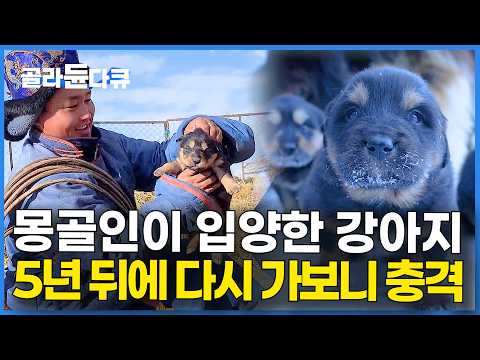 Mongolian Herding Dog Bankar Faces Down a Wolf: By Day It Chases Predators, By Night It Guards the Family's SleepEBSDocumentary (EBS 다큐)5 days ago · 24:33 · 257.4K views · Created 5 days ago
 Food critic who moved from Seoul to Inje and settled there visits a set meal of highland crops and wild mushroomsEBSDocumentary (EBS 다큐)last week · 13:35 · 1.1K views · Created last week